
The Complete Guide to Mexican Mole
History, Tradition, Regional Varieties and the Secrets Behind One of Mexico's Greatest Culinary Treasures
Some flavours nourish us.
Others tell a story.
Mole belongs to the second category.
Long before Mexico existed as a nation, Indigenous peoples were already preparing complex sauces using dried chillies, seeds, herbs and native ingredients to celebrate important moments within their communities. Centuries later, spices, nuts and cacao introduced from across the Atlantic blended with these ancestral recipes, giving birth to what many consider one of the world's greatest culinary masterpieces.
Today, Mexico is home to dozens of different moles, each with its own personality, ingredients and history. Oaxaca is famous for its legendary Seven Moles; Puebla is celebrated as the birthplace of the iconic Mole Poblano; and throughout the country, countless families continue to prepare their own recipes, carefully passed down from one generation to the next.
But what exactly is mole?
Why are there so many different varieties? Does it really contain chocolate? Is it spicy? How is it prepared? And why is it considered one of the most important dishes in Mexican cuisine?
In this guide, you'll discover the fascinating history of mole, learn why it has become one of Mexico's greatest culinary symbols, and explore the traditions that continue to keep this extraordinary recipe alive. Think of this as the first chapter in a journey through the flavours, history and culture behind one of Mexico's most treasured dishes.
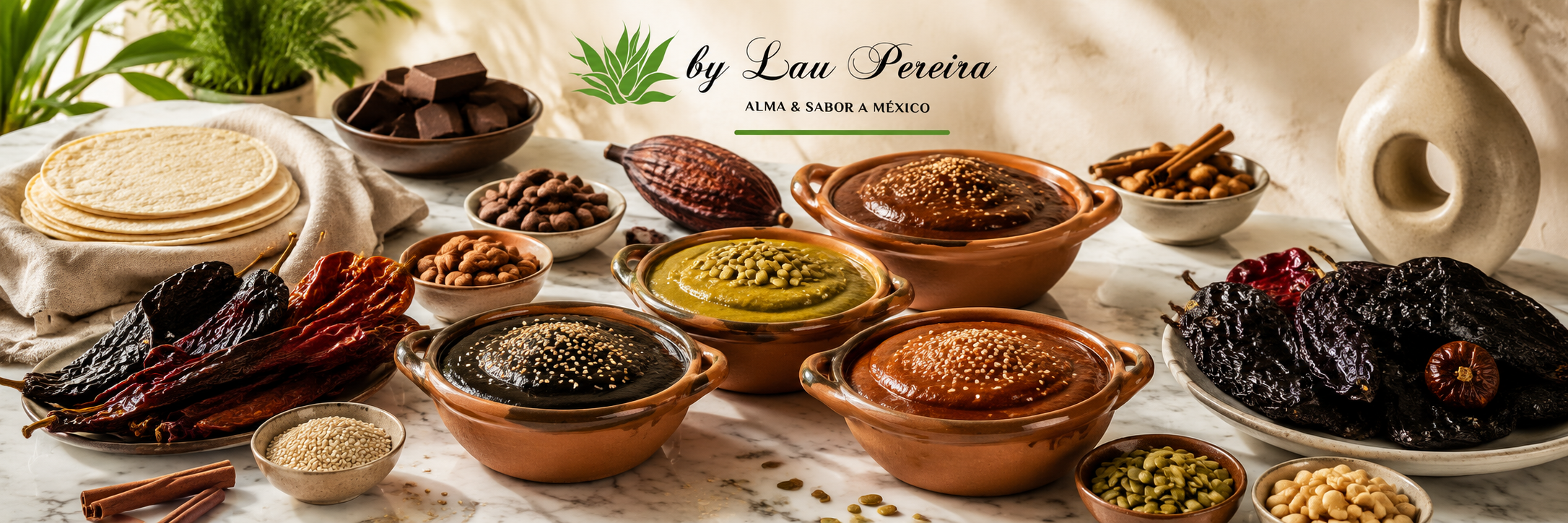
What Is Mexican Mole?
At first glance, mole may look like just another sauce.
For Mexicans, however, it is so much more.
Mole is one of the greatest expressions of Mexican gastronomy—a dish that brings together history, tradition, craftsmanship and cultural identity in a single preparation.
Unlike most sauces, mole was never intended to play a supporting role. It is the element that defines the dish. Every recipe is the result of a carefully balanced combination of dried chillies, spices, seeds, nuts, herbs and other ingredients that come together to create a remarkable depth of flavour unlike anything else in the culinary world.
Although many people immediately think of Mole Poblano, the truth is that there is no such thing as one mole. Mexico is home to dozens of regional varieties, each reflecting the history, local ingredients and culinary traditions of the place where it originated. Some recipes emphasise dried chillies and cacao, while others showcase fresh herbs, pumpkin seeds or nuts, resulting in entirely different colours, aromas and flavour profiles.
This incredible diversity is precisely what makes mole so fascinating. There is no official recipe and no universal formula. Even within the same town, two families may prepare the same type of mole in completely different ways. Every recipe is shaped by family tradition, local ingredients and techniques that have been passed down through generations.
More than a recipe, mole represents a philosophy of cooking. It is prepared with time, patience and respect for every ingredient. The real secret lies not simply in what goes into the pot, but in how each ingredient is toasted, ground, cooked and balanced until the final sauce achieves extraordinary harmony and complexity.
It is this unique combination of tradition, craftsmanship and cultural identity that has made mole one of the most respected dishes in Mexican cuisine and an internationally recognised symbol of the country's rich gastronomic heritage.
Mexican Mole at a Glance
Feature |
Information |
Country of Origin |
Mexico |
Original Name |
Mōlli (Nahuatl) |
Meaning |
Sauce or mixture |
Main Ingredients |
Dried chillies, spices, seeds, nuts and aromatic herbs |
Does it contain chocolate? |
Many traditional moles do, but not all |
How many varieties exist? |
Dozens of regional recipes |
Most famous variety |
Mole Poblano |
Region best known for mole |
Oaxaca (Home of the Seven Moles) |
Did You Know?
The word "mole" comes from the Nahuatl term mōlli, which simply means "sauce" or "mixture." Over the centuries, that simple word came to represent one of the most sophisticated and iconic dishes in Mexican cuisine.
Ready to Experience Authentic Mexican Mole?
At By Lau Pereira, you'll find a carefully selected collection of Traditional Mexican Moles, including Mole Doña María, Mole Negro, Mole Verde, Mole Rojo, and other authentic specialties imported directly from Mexico.
How One of Mexico's Oldest Recipes Was Born
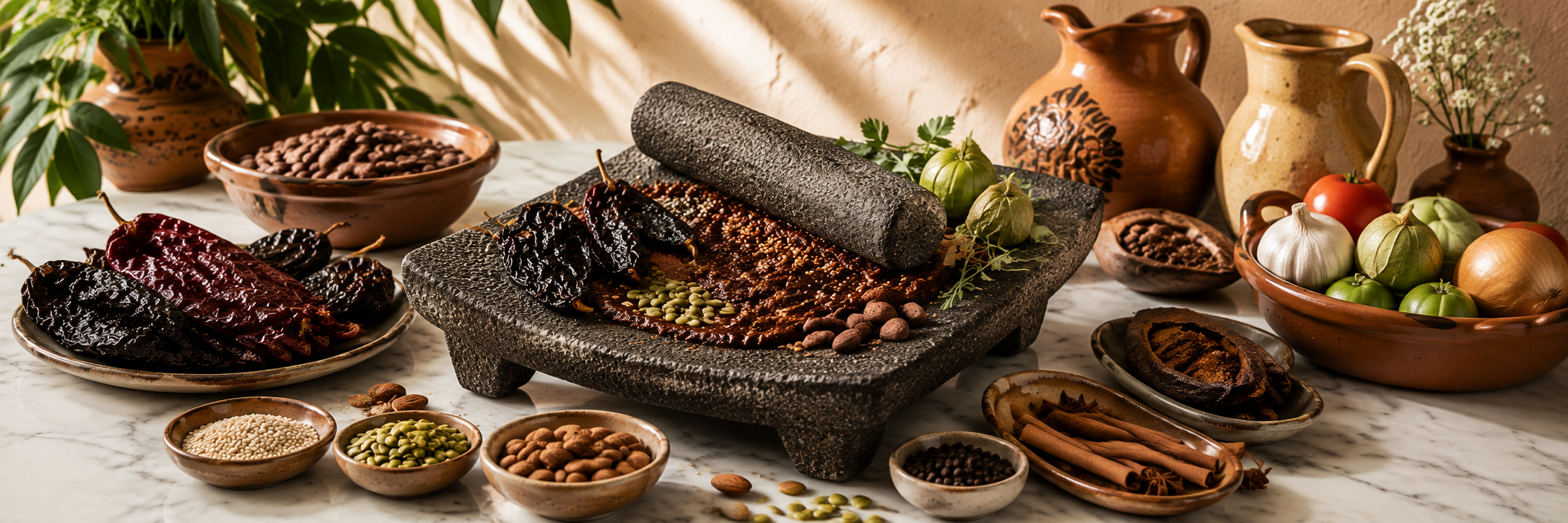
Long before the Spanish arrived in the Americas, the Indigenous peoples living throughout what is now Mexico were already preparing rich, complex sauces using the ingredients nature provided. Dried chillies, tomatoes, tomatillos, pumpkin seeds, aromatic herbs and other native plants were ground by hand on metates (traditional stone grinding slabs) to create thick sauces served with game, fish, poultry and maize.
These sauces were known in the Nahuatl language as mōlli, a word meaning simply "sauce" or "mixture." Over time, that ancient word evolved into what we know today as mole.
When the Spanish arrived in the 16th century, they introduced ingredients from Europe, Asia and the Middle East that would forever influence Mexican cooking. Spices such as cinnamon, cloves and anise joined Indigenous recipes, together with almonds, sesame seeds, nuts and new culinary techniques. Rather than replacing the existing traditions, these new ingredients enriched recipes that had already existed for centuries.
From this remarkable meeting of two culinary worlds emerged the moles we know today—deeply rooted in Indigenous traditions while enhanced by ingredients that had travelled across oceans.
As the centuries passed, each region of Mexico adapted mole according to its own local ingredients, climate and customs. The result was an extraordinary diversity of recipes, each with its own personality, making it impossible to speak of a single "original" mole.
Today, mole remains an essential part of Mexico's most important celebrations. Weddings, baptisms, patron saint festivals, birthdays and family gatherings are often marked by the preparation of mole. In many communities, making mole is still a collective effort, with several generations of the same family working side by side for hours—or even days—to prepare a recipe that represents far more than food. It represents memory, tradition and identity.
Did You Know?
Some traditional moles contain 30 to 40 different ingredients and can take more than two days to prepare.
In many Mexican families, the recipe is considered a treasured family inheritance and is rarely written down. Instead, it is passed from one generation to the next through practice, shared experience and countless hours spent together in the kitchen.
History or Legend?
One of the most famous stories surrounding the origin of Mole Poblano tells of a group of nuns at the Convent of Santa Rosa in Puebla during the 17th century. According to the legend, they created an improvised sauce to honour an important visitor by combining the ingredients they had on hand, including chocolate and a variety of spices.
It is a wonderful story and remains an important part of Mexican culinary folklore.
However, most historians now believe this tale is more legend than historical fact, as references to sauces resembling mole existed centuries before the convent story.
Today, the prevailing view is that Mole Poblano, like many other varieties of mole, evolved gradually over hundreds of years through the blending of Indigenous cooking traditions with ingredients introduced during the colonial period.
Continue Discovering the Fascinating World of Mole
The story of mole is far from over.
Across Mexico, dozens of regional varieties continue to reflect the country's extraordinary culinary diversity. Some are known for their deep, complex flavours, while others stand out for their fresh herbal notes or preserve traditions that date back to pre-Hispanic times.
In our next article, we'll travel to Oaxaca, world-renowned as the Land of the Seven Moles, to discover the unique characteristics of Mole Negro, Mole Rojo, Mole Coloradito, Mole Verde, Chichilo, Amarillo and Manchamanteles.
Each one tells a different story.
Each one represents a different region.
Each one offers its own unique interpretation of Mexican cuisine.
👉 Continue Reading:
The Seven Moles of Oaxaca – The Complete Guide to Mexico's Most Iconic Regional Moles
Every Ingredient Has a Story to Tell
At By Lau Pereira, we believe that every ingredient carries a story.
Our mission goes far beyond bringing authentic Mexican products to Portugal. We want to share the culture, traditions and flavours that have made Mexican cuisine one of the richest and most fascinating culinary traditions in the world.
We hope this guide has inspired you to discover a little more about the remarkable world of mole.
Now, we invite you to continue this journey with us—one ingredient, one recipe and one story at a time.
Because great food isn't just cooked… it's also a story waiting to be told.